Republican divisions, Trump’s detachment stymie GOP efforts to reopen DHS
Republican divisions, Trump’s detachment stymie GOP efforts to reopen DHS
The United States is currently witnessing the longest partial government shutdown in its history, specifically targeting the Department of Homeland Security (DHS). As the impasse stretches beyond the 48-day mark, the crisis has exposed deep-seated Republican divisions and a perceived detachment from President Donald Trump that have collectively stymied efforts to reopen the agency. While the Senate recently found a rare moment of bipartisan consensus to fund the majority of DHS operations, the plan was summarily rejected by House leadership, leading to a public civil war between the two chambers. This legislative paralysis has left thousands of federal workers without pay and critical national security functions operating on a razor-thin margin, even as the executive branch attempts to bypass Congress through a series of unprecedented executive orders.
The Republican efforts to reopen DHS have been significantly hindered by a combination of internal caucus disagreements between the House and Senate and a shifting stance from the White House. The primary conflict centers on whether to fund the department in its entirety, including controversial immigration enforcement agencies like ICE and CBP, or to pass a "skinny" bill that reopens non-controversial sectors like the TSA and FEMA first. This lack of a unified GOP strategy, coupled with President Trump’s late-stage intervention, has prolonged the longest DHS shutdown in U.S. history.
The Genesis of the Longest DHS Shutdown in History
The current crisis began on February 14, 2026, after a series of short-term funding measures failed to address a fundamental disagreement over immigration policy. Unlike general government shutdowns, this lapse is uniquely isolated to the Department of Homeland Security. The roots of the conflict lie in a demand from Congressional Democrats for significant reforms within Immigration and Customs Enforcement (ICE) and Customs and Border Protection (CBP). These demands follow high-profile incidents, including fatal shootings by federal agents in Minneapolis, which prompted calls for body cameras, restrictions on agents wearing masks, and the requirement of judicial warrants for entering private residences.
Republicans, particularly those in the House Freedom Caucus, viewed these proposed reforms as an attempt to "defund" law enforcement. They insisted that any funding bill must include full, unrestricted support for border and immigration agents. As neither side blinked, the clock ran out on January 30, and after a very brief resolution for other agencies, the DHS saw its specific funding expire in mid-February. What was initially expected to be a few days of political posturing has spiraled into a record-breaking stalemate that is now entering its second month.
Senate Bipartisanship vs. House Hardliners
A major turning point occurred when Senate Majority Leader John Thune and Senate Minority Leader Chuck Schumer managed to strike a deal that appeared to offer an off-ramp. The Senate plan proposed a "two-step" or "split" approach: pass a bill to fund all DHS components except for ICE and portions of CBP. This would have immediately restored pay for TSA agents, the Coast Guard, FEMA, and the Cybersecurity and Infrastructure Security Agency (CISA), while leaving the immigration enforcement debate for a separate legislative track.
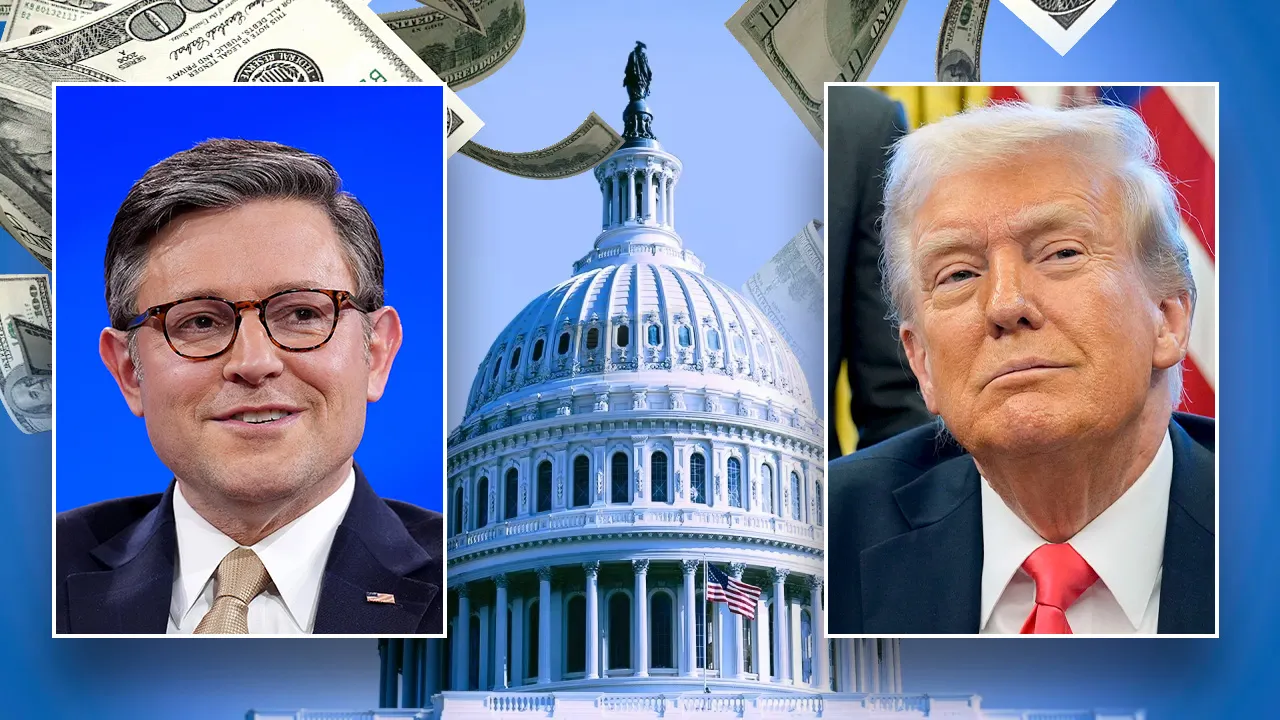
The Senate passed this measure with unanimous consent, a rare feat in a polarized Washington. However, the victory was short-lived. Upon reaching the House, Speaker Mike Johnson labeled the Senate’s bipartisan agreement a "joke." Johnson, facing intense pressure from his right flank, argued that separating the funding would leave border agents "out to dry." This public rejection of a Senate GOP-led plan highlighted a massive rift within the party. While Senate Republicans sought a pragmatic solution to end the public relations nightmare of long airport lines and unpaid workers, House Republicans prioritized a "no-compromise" stance on immigration enforcement.
Trump’s Role: From Detachment to Directive
Throughout the early weeks of the shutdown, President Donald Trump remained notably detached from the specific legislative negotiations. Reports suggested that while his staff indicated approval for the Senate’s bipartisan approach, the President himself remained silent. This detachment allowed House hardliners to claim they were the true defenders of the Trump agenda, further emboldening their opposition to Speaker Johnson’s potential compromises. The lack of a clear, singular signal from the White House created a vacuum filled by intraparty squabbling.
However, as the shutdown hit the 45-day mark and polling began to show the public blaming Republicans for the chaos, the President shifted his strategy. On a Wednesday afternoon, Trump issued a directive via social media, ordering Republicans to follow a "two-parallel-track" plan. This plan mirrored the earlier Senate framework but added a crucial caveat: the immigration enforcement agencies (ICE and CBP) must be funded through a "budget reconciliation" process by June 1. This move was designed to bypass the 60-vote filibuster threshold in the Senate, allowing Republicans to pass immigration funding with a simple majority. While this provided a path forward, it arrived only after weeks of "whiplash" and confusion within the GOP ranks.
The Impact on National Security and FEMA
The prolonged shutdown has had tangible, dangerous consequences for the nation’s infrastructure. One of the most hard-hit agencies is the Federal Emergency Management Agency (FEMA). Reports from within the department indicate that the Disaster Relief Fund has been "drastically depleted." With the fund dropping to critical levels—estimated at just $5 billion—officials have warned that a single major natural disaster could completely bankrupt the agency’s ability to respond.
FEMA has already begun scaling back long-term rebuilding projects across various states to preserve cash for immediate life-saving operations. This "emergency only" mode means that communities recovering from past hurricanes or wildfires are seeing their recovery efforts stalled. Furthermore, the Cybersecurity and Infrastructure Security Agency (CISA) has faced staffing challenges, raising concerns about the nation’s vulnerability to foreign cyber threats during a time of heightened global tension, specifically regarding the ongoing conflict involving Iran.
| DHS Component | Shutdown Impact Status |
|---|---|
| TSA (Aviation Security) | Agents working without pay; lines increased significantly before Executive Order. |
| FEMA (Disaster Relief) | Funding at "critical" levels; long-term recovery projects paused nationwide. |
| U.S. Coast Guard | Active-duty paid via shifts in funds; 9,500+ civilians remained unpaid for weeks. |
| ICE and CBP | Paid via previous "One Big Beautiful Bill Act" funds, but operational budget stalled. |
The TSA Crisis and Airport Delays
For the average American, the most visible sign of the shutdown has been at the nation’s airports. Transportation Security Administration (TSA) agents, categorized as "essential" workers, were required to report to duty without receiving a paycheck. By late March, the "blue flu"—a phenomenon where agents call in sick because they cannot afford the gas or childcare needed to get to work—began to paralyze major hubs like LaGuardia and O’Hare.
Wait times at security checkpoints exceeded three hours in some cities, leading to missed flights and economic friction in the travel industry. The situation became so dire that the administration was forced to act unilaterally. President Trump signed an executive order specifically to find alternate funding sources to pay TSA agents, a move that successfully cleared the airport bottlenecks but did nothing to address the broader legislative impasse. Critics argued that by fixing the most visible symptom of the shutdown, the President actually reduced the political pressure on Congress to pass a full funding bill.
Intraparty Warfare: Johnson vs. Thune
The friction between Speaker Mike Johnson and Senate Majority Leader John Thune has reached a boiling point. Thune, who worked for weeks to build a 100-0 consensus in the Senate, was reportedly "incensed" when Johnson dismissed the deal as a "joke" hours after it passed. The Senate leadership feels that the House is being driven by a "hardline minority" that refuses to acknowledge the reality of a divided government. In contrast, House conservatives have expressed "whiplash" and "frustration" with Johnson for his sudden reversal in embracing the two-track plan after initially rejecting it.
Democrats have been quick to capitalize on this dysfunction. Senate Minority Leader Chuck Schumer has labeled the situation the "Johnson Shutdown," arguing that the House Speaker is a "hostage" to the most extreme elements of his party. The public warring between GOP leaders has made it difficult for the party to maintain a consistent message, allowing Democrats to frame the narrative as one of Republican incompetence rather than a legitimate debate over border security reforms.
Executive Orders: A Constitutional Workaround?
In the absence of a legislative solution, President Trump has increasingly relied on executive power to keep the DHS afloat. Beyond the initial order to pay TSA agents, the President recently announced a memo titled "Liberating the Department of Homeland Security From the Democrat-Caused Shutdown." This order directs Secretary Markwayne Mullin to find "funds that have a reasonable and logical nexus" to DHS functions to pay the remaining 35,000+ employees who have gone without checks.
While this move has been welcomed by the workers and their families, it has raised significant constitutional questions. Legal experts and some members of Congress have pointed out that the power of the purse resides solely with the legislative branch. By unilaterally deciding to move funds around to pay salaries, the administration is treading on thin legal ice. However, the White House has declared the situation an "emergency compromising the Nation’s security," a designation intended to provide the legal cover necessary for these financial maneuvers.
What’s Next: The June 1 Deadline
As Congress remains on its spring recess, the focus turns to the return of lawmakers in mid-April. The "two-track" strategy is now the official plan of the Republican leadership. The first step involves the House finally taking up and passing the Senate’s bill to reopen the non-immigration parts of DHS. If passed, this would officially end the shutdown for agencies like FEMA and the Coast Guard through September.
The second, more difficult step is the "skinny reconciliation bill" for ICE and CBP. Trump has set June 1 as the hard deadline for this package. The reconciliation process is fraught with its own set of rules, and it is likely that various GOP factions will try to attach other policy priorities to the bill, potentially delaying it further. If Republicans cannot unify behind a single reconciliation package by June, the funding for border enforcement will once again become a flashpoint, potentially leading to another crisis in the heat of the 2026 election cycle.
Frequently Asked Questions
Q1: Why is this the longest DHS shutdown in history?
A1: The current shutdown has lasted over 48 days because of a deep impasse over immigration enforcement reforms and a significant rift between House and Senate Republicans on how to proceed with funding.
Q2: Who is currently being paid within DHS?
A2: Initially, many employees went without pay. However, through recent executive orders by President Trump, TSA agents and other DHS staff are beginning to receive back pay and current salaries via redirected federal funds.
Q3: What is the "two-track" plan proposed by GOP leaders?
A3: The plan involves reopening the non-controversial parts of DHS (FEMA, TSA, Coast Guard) through a standard appropriations bill, while funding ICE and Border Patrol through a separate "reconciliation" bill that only requires a simple majority in the Senate.
Q4: How has the shutdown affected FEMA?
A4: FEMA’s Disaster Relief Fund has reached a critical low of $5 billion, causing the agency to pause long-term recovery projects to save money for immediate emergency responses.
Q5: What are the "reforms" Democrats are asking for in exchange for funding?
A5: Democrats have requested body cameras for ICE agents, a ban on agents wearing masks during raids, and the requirement of judicial warrants before entering private residences to perform immigration enforcement.
Conclusion
The record-breaking shutdown of the Department of Homeland Security serves as a stark illustration of the internal conflicts currently defining the Republican Party. The division between the pragmatic, bipartisan-leaning Senate and the ideological House hardliners has created a legislative vacuum that even a sitting President struggled to fill for weeks. While President Trump’s recent intervention and the two-track funding plan provide a technical roadmap for reopening the department, the political scars from this nearly two-month impasse will likely linger. As the June 1 deadline for immigration funding approaches, the GOP will need to find a level of unity that has eluded them throughout this crisis if they hope to secure the border and fully restore the operations of the nation's most critical security agency.
Republican divisions, Trump’s detachment stymie GOP efforts to reopen DHS
Republican divisions, Trump’s detachment stymie GOP efforts to reopen DHS Wallpapers
Collection of republican divisions, trump’s detachment stymie gop efforts to reopen dhs wallpapers for your desktop and mobile devices.

Vibrant Republican Divisions, Trump’s Detachment Stymie Gop Efforts To Reopen Dhs Artwork for Your Screen
Transform your screen with this vivid republican divisions, trump’s detachment stymie gop efforts to reopen dhs artwork, a true masterpiece of digital design.
Artistic Republican Divisions, Trump’s Detachment Stymie Gop Efforts To Reopen Dhs Design Photography
A captivating republican divisions, trump’s detachment stymie gop efforts to reopen dhs scene that brings tranquility and beauty to any device.

Exquisite Republican Divisions, Trump’s Detachment Stymie Gop Efforts To Reopen Dhs Landscape Nature
Immerse yourself in the stunning details of this beautiful republican divisions, trump’s detachment stymie gop efforts to reopen dhs wallpaper, designed for a captivating visual experience.

Captivating Republican Divisions, Trump’s Detachment Stymie Gop Efforts To Reopen Dhs Capture Nature
Immerse yourself in the stunning details of this beautiful republican divisions, trump’s detachment stymie gop efforts to reopen dhs wallpaper, designed for a captivating visual experience.

Breathtaking Republican Divisions, Trump’s Detachment Stymie Gop Efforts To Reopen Dhs Landscape Collection
Transform your screen with this vivid republican divisions, trump’s detachment stymie gop efforts to reopen dhs artwork, a true masterpiece of digital design.

Serene Republican Divisions, Trump’s Detachment Stymie Gop Efforts To Reopen Dhs Landscape for Your Screen
Experience the crisp clarity of this stunning republican divisions, trump’s detachment stymie gop efforts to reopen dhs image, available in high resolution for all your screens.

Gorgeous Republican Divisions, Trump’s Detachment Stymie Gop Efforts To Reopen Dhs Scene Collection
A captivating republican divisions, trump’s detachment stymie gop efforts to reopen dhs scene that brings tranquility and beauty to any device.

Vivid Republican Divisions, Trump’s Detachment Stymie Gop Efforts To Reopen Dhs Artwork Digital Art
Explore this high-quality republican divisions, trump’s detachment stymie gop efforts to reopen dhs image, perfect for enhancing your desktop or mobile wallpaper.

Vivid Republican Divisions, Trump’s Detachment Stymie Gop Efforts To Reopen Dhs Design Photography
Transform your screen with this vivid republican divisions, trump’s detachment stymie gop efforts to reopen dhs artwork, a true masterpiece of digital design.

Vibrant Republican Divisions, Trump’s Detachment Stymie Gop Efforts To Reopen Dhs Picture Nature
Experience the crisp clarity of this stunning republican divisions, trump’s detachment stymie gop efforts to reopen dhs image, available in high resolution for all your screens.

Crisp Republican Divisions, Trump’s Detachment Stymie Gop Efforts To Reopen Dhs Picture Illustration
Immerse yourself in the stunning details of this beautiful republican divisions, trump’s detachment stymie gop efforts to reopen dhs wallpaper, designed for a captivating visual experience.

Exquisite Republican Divisions, Trump’s Detachment Stymie Gop Efforts To Reopen Dhs Picture for Mobile
A captivating republican divisions, trump’s detachment stymie gop efforts to reopen dhs scene that brings tranquility and beauty to any device.

Vibrant Republican Divisions, Trump’s Detachment Stymie Gop Efforts To Reopen Dhs Background Art
Explore this high-quality republican divisions, trump’s detachment stymie gop efforts to reopen dhs image, perfect for enhancing your desktop or mobile wallpaper.
Vivid Republican Divisions, Trump’s Detachment Stymie Gop Efforts To Reopen Dhs View Photography
Experience the crisp clarity of this stunning republican divisions, trump’s detachment stymie gop efforts to reopen dhs image, available in high resolution for all your screens.

High-Quality Republican Divisions, Trump’s Detachment Stymie Gop Efforts To Reopen Dhs Capture Illustration
Transform your screen with this vivid republican divisions, trump’s detachment stymie gop efforts to reopen dhs artwork, a true masterpiece of digital design.

Exquisite Republican Divisions, Trump’s Detachment Stymie Gop Efforts To Reopen Dhs Landscape for Your Screen
Find inspiration with this unique republican divisions, trump’s detachment stymie gop efforts to reopen dhs illustration, crafted to provide a fresh look for your background.

Artistic Republican Divisions, Trump’s Detachment Stymie Gop Efforts To Reopen Dhs View Photography
Find inspiration with this unique republican divisions, trump’s detachment stymie gop efforts to reopen dhs illustration, crafted to provide a fresh look for your background.

Vibrant Republican Divisions, Trump’s Detachment Stymie Gop Efforts To Reopen Dhs Design Art
Experience the crisp clarity of this stunning republican divisions, trump’s detachment stymie gop efforts to reopen dhs image, available in high resolution for all your screens.

Detailed Republican Divisions, Trump’s Detachment Stymie Gop Efforts To Reopen Dhs Background Concept
Transform your screen with this vivid republican divisions, trump’s detachment stymie gop efforts to reopen dhs artwork, a true masterpiece of digital design.
Breathtaking Republican Divisions, Trump’s Detachment Stymie Gop Efforts To Reopen Dhs Abstract Collection
Transform your screen with this vivid republican divisions, trump’s detachment stymie gop efforts to reopen dhs artwork, a true masterpiece of digital design.
Download these republican divisions, trump’s detachment stymie gop efforts to reopen dhs wallpapers for free and use them on your desktop or mobile devices.