Can You Sleep In A Tesla The question of whether you can sleep in a Tesla has moved from a niche curiosity to a mainstream travel trend, often referred to as Tesla camping. Unlike traditional internal combustion engine vehicles, where sleeping with the engine running is dangerous due to carbon monoxide risks, a Tesla provides a safe, climate-controlled environment powered entirely by its high-voltage battery. With the introduction of specialized software features like Camp Mode, Tesla has revolutionized the road trip experience, allowing owners to transform their vehicles into mobile hotel rooms. Whether you are looking to save money on accommodation, stay closer to nature, or simply need a safe backup plan during an emergency, the modern Tesla ecosystem provides a remarkably comfortable and technologically advanced sleeping solution. 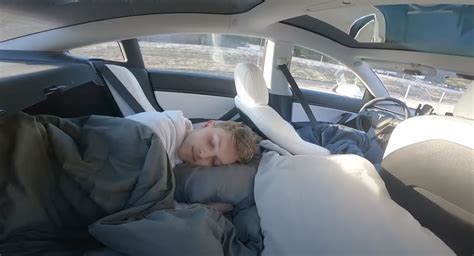
The Science and Safety of Tesla Camp Mode
The cornerstone of the Tesla sleeping experience is Camp Mode. This feature allows the vehicle to maintain airflow and temperature control while parked, ensuring the cabin stays cozy regardless of external weather conditions. When Camp Mode is enabled, the car keeps the HVAC system active, powers the USB ports for charging devices, and allows the infotainment screen to remain functional for entertainment like Netflix or YouTube. Crucially, it disables the alarm and Sentry Mode internally while keeping the doors locked, providing a secure environment. From a safety perspective, sleeping in an electric vehicle is inherently safer than in a gas car. There is no risk of exhaust fumes entering the cabin. Furthermore, Tesla's advanced air filtration systems, particularly the HEPA filters found in the Model Y, S, and X with Bioweapon Defense Mode, ensure that the air you breathe while sleeping is exceptionally clean. Most users report that running Camp Mode for an eight-hour night consumes between 5% and 10% of the battery, depending on the outside temperature. This efficiency makes it a viable option for most travelers, provided they have enough charge to reach their next destination or a nearby Supercharger in the morning. Optimizing the Tesla Sleeping Configuration
While you can technically recline the front seats and take a nap, the ultimate Tesla sleep setup involves folding down the rear seats to create a flat sleeping platform. The Model Y is widely considered the best model for this purpose due to its hatchback design and generous vertical space. However, the Model 3, Model S, and Model X are also popular choices. To achieve a "glamping" level of comfort, most owners invest in a dedicated mattress designed specifically for the car's dimensions. These range from memory foam toppers to high-end self-inflating mattresses that fit perfectly around the wheel wells.
| Feature | Impact on Sleeping Experience |
| Camp Mode | Maintains temperature and airflow all night safely. |
| Fold-Flat Seats | Creates a large, level surface for a full-size mattress. |
| Glass Roof | Provides views of the stars but may require shades for privacy. |
| Battery Efficiency | Uses only 1-1.5% charge per hour for climate control. |
Beyond the mattress, privacy is a key consideration. Custom-fit window shades are highly recommended to block out light from streetlamps and provide total privacy from passersby. These shades also act as insulation, helping to maintain the cabin temperature and reduce the workload on the HVAC system. Storage is another advantage; Tesla vehicles often feature a "frunk" (front trunk) and a "sub-trunk" area in the back, which allow you to store your luggage and gear away from your sleeping area, keeping the interior clean and spacious.
Legal Considerations and Best Practices
Even though your Tesla is a comfortable place to sleep, the legality of doing so depends heavily on your location. In many regions, sleeping in a vehicle on public streets is a legal gray area or explicitly restricted by local ordinances. To avoid a knock on the window from law enforcement, many Tesla campers utilize designated campgrounds, truck stops, or retail parking lots that permit overnight stays, such as certain Walmart locations. National forests and Bureau of Land Management (BLM) lands in the United States often allow dispersed camping, making them ideal for EV owners. It is also important to practice good etiquette. Avoid camping in Supercharger stalls, as this prevents other drivers from charging their vehicles and may result in idle fees. Always aim to arrive at your sleeping spot with a healthy state of charge—ideally above 20%—to ensure Camp Mode can run throughout the night without risk. If you are sleeping in a residential area, staying inconspicuous is vital. Using window shades and keeping noise levels low will help you blend in and avoid drawing unnecessary attention.
Can You Sleep While the Car is Driving?
A common misconception is that Tesla's Full Self-Driving (Supervised) software allows a driver to sleep while the vehicle navigates. This is strictly prohibited and extremely dangerous. Current Tesla autonomy systems require an attentive driver who is ready to take control at any moment. The vehicle uses an internal cabin camera to monitor the driver's eyes and head position; if it detects that the driver is drowsy or has closed their eyes, it will issue loud warnings and eventually disengage the system, slowing the car to a stop. Sleeping behind the wheel of a moving vehicle can result in severe legal penalties, license suspension, and life-threatening accidents.
FAQ about Can You Sleep In A Tesla
How much battery does Camp Mode use overnight?
On average, Camp Mode uses about 1% to 1.5% of battery charge per hour. In moderate weather (60-70°F), you might use 7% or 8% over an eight-hour period. In extreme cold or heat, the consumption can rise to 15% or more as the heat pump or AC works harder to maintain the set temperature.
Is it safe to sleep in a Tesla while it is charging?
Yes, it is safe to sleep in the car while it is charging at a Level 2 charger or a wall outlet. However, it is generally discouraged to sleep while Supercharging at a public station due to high turnover and the risk of incurring idle fees once the charging session is complete.
What is the best Tesla model for camping?
The Tesla Model Y is generally considered the best for camping because of its ample head space, flat-folding rear seats, and hatchback opening which makes it easy to move gear in and out. The Model X also offers great space, while the Model 3 is popular for solo travelers who don't mind a slightly tighter fit.
Conclusion
Sleeping in a Tesla is not only possible but has become a preferred way of travel for thousands of owners worldwide. By utilizing Camp Mode, the vehicle provides a safe, climate-controlled, and high-tech sanctuary that traditional cars simply cannot match. From the ability to wake up to a sunrise through a panoramic glass roof to the convenience of having your own mobile entertainment system, Tesla has turned car camping into a premium experience. As long as you follow local laws, pack the right gear, and monitor your battery levels, a Tesla can be the ultimate companion for your next great adventure.