Can You Recycle Particle Board As we move toward a more sustainable future in 2026, the question of how to manage composite wood waste has become a central topic for homeowners and environmentalists alike. Particle board, a common staple in modern furniture and construction, is often praised for its affordability and versatility, yet its disposal presents a unique set of challenges. Unlike solid wood, particle board is a manufactured product composed of wood chips, sawmill shavings, and sawdust, all bound together by synthetic resins and chemical adhesives. This complex composition makes many people wonder: can you recycle particle board, or is it destined for the landfill? Understanding the nuances of composite wood disposal is essential for anyone looking to reduce their carbon footprint and navigate the evolving regulations of waste management. 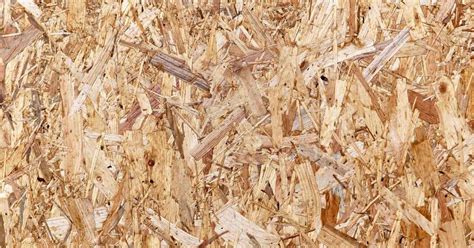
The Composition of Particle Board and Its Impact on Recycling
To understand why recycling particle board is so difficult, one must first look at what goes into its production. Particle board is created by mixing wood particles with a resin, usually urea-formaldehyde or phenol-formaldehyde, and then pressing the mixture under heat into large sheets. This process creates a sturdy, flat material that is perfect for flat-pack furniture, shelving, and subflooring. However, the very adhesives that provide the board with its structural integrity are the primary barrier to traditional recycling. Most standard wood recycling facilities are designed to handle clean, untreated timber. When particle board is introduced into these systems, the chemical resins can contaminate the entire batch. Furthermore, many particle board products are finished with laminates, veneers, or paints, which add further layers of non-wood materials to the mix. Because the wood fibers are so tightly bonded with synthetic chemicals, separating them for reuse in high-quality paper or new wood products is often technically impossible or economically unfeasible. As a result, the majority of curbside recycling programs explicitly exclude particle board and other composite woods like MDF (Medium Density Fiberboard). Eco-Friendly Disposal and Specialized Recycling Options
While your local blue bin might be off-limits, there are emerging pathways for responsibly disposing of particle board. In 2026, many specialized industrial recycling centers have developed technology to process composite woods for specific secondary uses. For instance, some facilities can grind down particle board into a substrate used for industrial-grade particle board production or as a bulking agent in certain types of heavy construction materials. Additionally, some municipalities have implemented "Clean Wood" programs at transfer stations. These programs may accept untreated particle board if it is separated from other trash. It is crucial to check with your local public works department to see if they have a partnership with an industrial processor. If a recycling option is not available, the next best step is often "upcycling" or donating the material. If the particle board is part of a functional piece of furniture, listing it for free on community platforms can extend its life and keep it out of the waste stream for several more years.
| Disposal Method | Feasibility and Impact |
| Curbside Recycling | Generally not accepted due to chemical resins and adhesives. |
| Industrial Wood Processors | High feasibility if local facilities exist; turns waste into new boards. |
| Landfill Disposal | Common but least eco-friendly; particle board does not compost. |
| Upcycling/Donation | Best for furniture; keeps items in use and prevents immediate waste. |
Why You Should Never Burn or Compost Particle Board
A common mistake made by those trying to be resourceful is attempting to burn particle board in a fireplace or backyard fire pit. This is extremely dangerous. When particle board is burned, the formaldehyde and other resins used in its construction release toxic gases into the air. These fumes are carcinogenic and can cause immediate respiratory distress, eye irritation, and long-term health complications. Even "low-emission" boards contain binders that should never be incinerated outside of a controlled, high-temperature industrial environment designed to capture pollutants. Similarly, particle board is not suitable for composting. While the wood fibers themselves are organic, the chemical adhesives are not biodegradable in a typical garden compost pile. These chemicals can leach into the soil, potentially harming beneficial microbes and contaminating any vegetables or plants grown in that soil. If you have particle board scraps from a DIY project, the safest and most responsible route is to take them to a designated waste transfer station that handles construction and demolition debris.
FAQ about Can You Recycle Particle Board
Is IKEA furniture made of particle board recyclable?
Most IKEA furniture is made of particle board or MDF. While IKEA has its own sustainability initiatives and some stores offer take-back programs to refurbish and resell items, the material itself is generally not accepted in residential curbside recycling bins. You should check with your specific IKEA location or local furniture bank before disposing of these items.
Can I put particle board in a yard waste container?
No. Yard waste containers are intended for organic materials like branches, grass, and leaves that will be turned into compost or mulch. Because particle board contains synthetic glues and often has chemical finishes, it will contaminate the organic waste stream and is strictly prohibited in green bins.
How can I tell if my particle board is treated?
Most particle board is treated with resins during manufacturing. If the board has a green or blue tint, it may be pressure-treated for moisture or insect resistance, making it hazardous waste. Even standard "untreated" particle board contains chemical binders, so it should always be handled as a manufactured composite rather than raw lumber.
Conclusion
Navigating the complexities of recycling particle board in 2026 requires a balance between environmental intent and practical reality. While the material is not currently compatible with most household recycling programs due to its chemical composition, progress is being made in industrial processing and community reuse programs. By avoiding the dangers of burning or composting and instead seeking out specialized transfer stations or donation opportunities, you can ensure that your particle board waste is handled as responsibly as possible. As technology advances, we can hope for even more efficient ways to close the loop on composite wood products, but for now, informed disposal remains our best tool for sustainability.