Paint Pull Test
The Ultimate Guide to the Paint Pull Test: Ensuring Flawless Coating Adhesion
If you work with industrial coatings, automotive finishes, or protective paints, you know that a beautiful finish is only half the battle. The true measure of quality lies beneath the surface: adhesion. That's where the crucial technique known as the Paint Pull Test comes in.
This test is the gold standard for determining how strongly a coating is bonded to its substrate. Skipping this step can lead to premature flaking, blistering, and expensive failures down the line. We're here to walk you through exactly what this test is, why it matters, and how to interpret the results like a professional.
Ready to ensure your next project is built to last? Let's dive into the fascinating world of coating adhesion testing.
Why You Can't Skip the Paint Pull Test
Adhesion failure is arguably the number one reason coatings fail prematurely. If the coating isn't stuck firmly, moisture can penetrate, leading to corrosion, rust, or complete delamination. The Paint Pull Test is your essential preventive measure.
By quantifying the bond strength, you gain empirical evidence that your preparation and application methods were correct. Furthermore, in many high-stakes industries, such as marine or infrastructure, this test is mandatory for compliance and safety standards.
It acts as an objective quality assurance tool, verifying that the paint system meets the manufacturer's or client's specifications before the structure is put into service.
The Two Main Ways to Perform a Paint Pull Test
While the term Paint Pull Test is often used broadly, there are two common methodologies used depending on the substrate, coating thickness, and required accuracy. Understanding the difference between these two is key to selecting the right tool for your job.
Cross-Cut Adhesion Test (A Quick Look)
The cross-cut method, often standardized under ASTM D3359, is a rapid and highly practical way to assess adhesion qualitatively. This test is typically used for thinner coatings (up to 5 mils/125 microns).
The procedure involves cutting a lattice pattern into the film, all the way down to the substrate. Adhesive tape is then applied and rapidly removed. The quality is rated based on how much paint remains in the grid area after the tape removal.
While useful for quick checks, it doesn't provide a precise numerical value, which is why professionals often turn to the dolly method for critical applications.
Dolly/Pull-Off Adhesion Test (The Heavy Duty Approach)
The pull-off adhesion test, standardized under ASTM D4541, is the definitive method for obtaining a quantitative measurement of bond strength. It works equally well for thin, thick, or multi-layer coating systems.
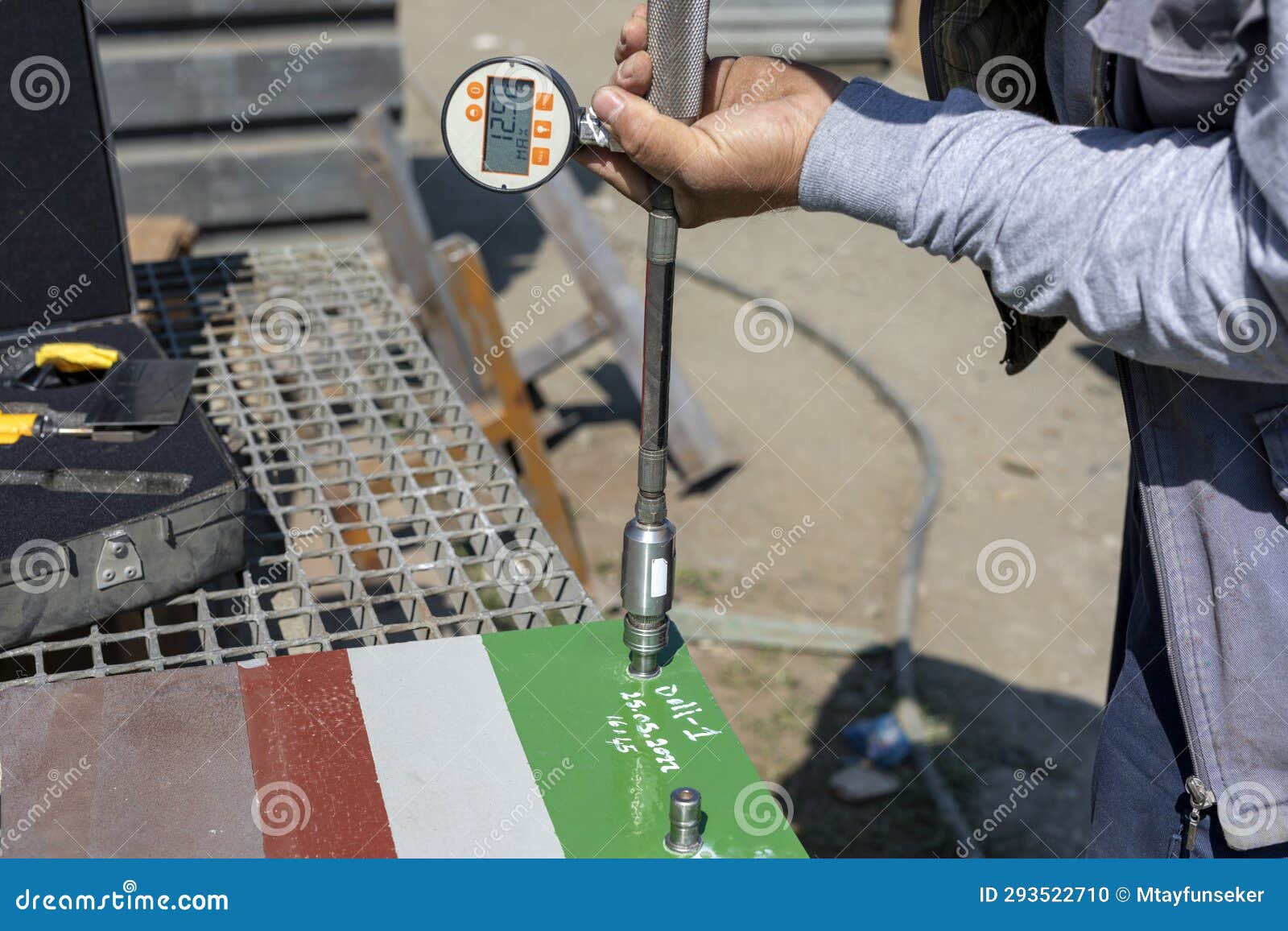
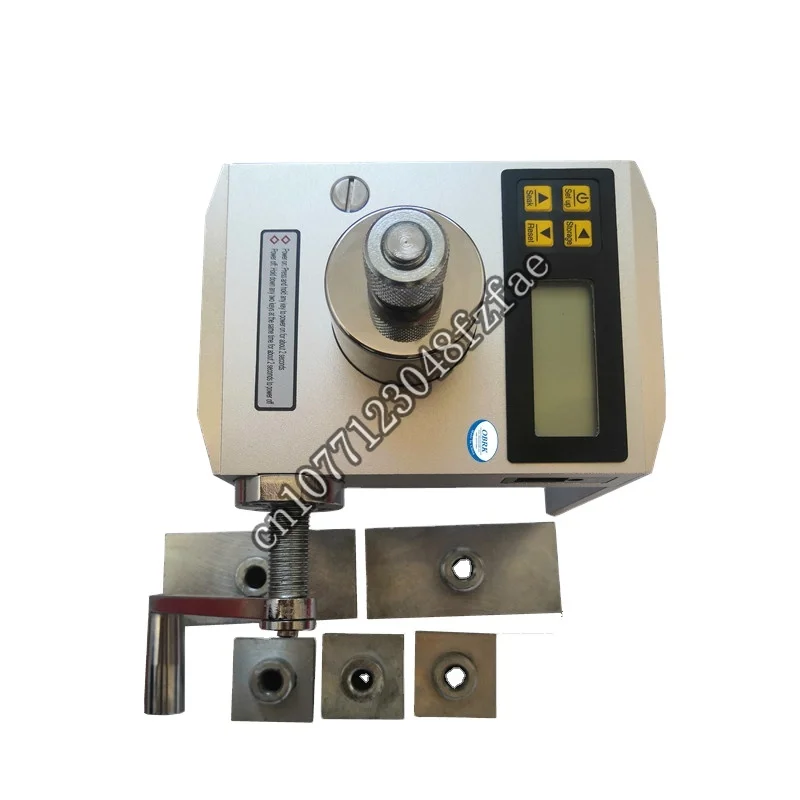
This test utilizes a specialized piece of equipment and small circular loading fixtures, often called dollies or studs. It provides a numerical measurement, usually in pounds per square inch (psi) or megapascals (MPa), defining the exact force required to separate the coating from the substrate.
If your project demands precise data and rigorous quality control, the pull-off Paint Pull Test is your best choice.
Step-by-Step: How the Dolly Paint Pull Test Works
Performing a successful dolly test requires meticulous attention to detail. This process ensures reliable and repeatable results that truly reflect the coating quality.
Here is a simplified step-by-step breakdown of how the professional pull-off Paint Pull Test is executed:
- Surface Preparation and Dolly Attachment: A dolly is securely glued onto the surface of the cured coating using a specialized adhesive. It is critical that the adhesive used is stronger than the anticipated adhesion of the coating itself.
- Curing Time: Allow ample time for the adhesive to fully cure. This is often the most time-consuming step, but rushing it will invalidate the test, as the glue may fail instead of the coating.
- Isolation Cut (Optional but Recommended): For thick or very strong coatings, a circular cutting tool is used to score the coating around the edge of the dolly. This ensures that only the area under the dolly is being tested, preventing peripheral edge effects.
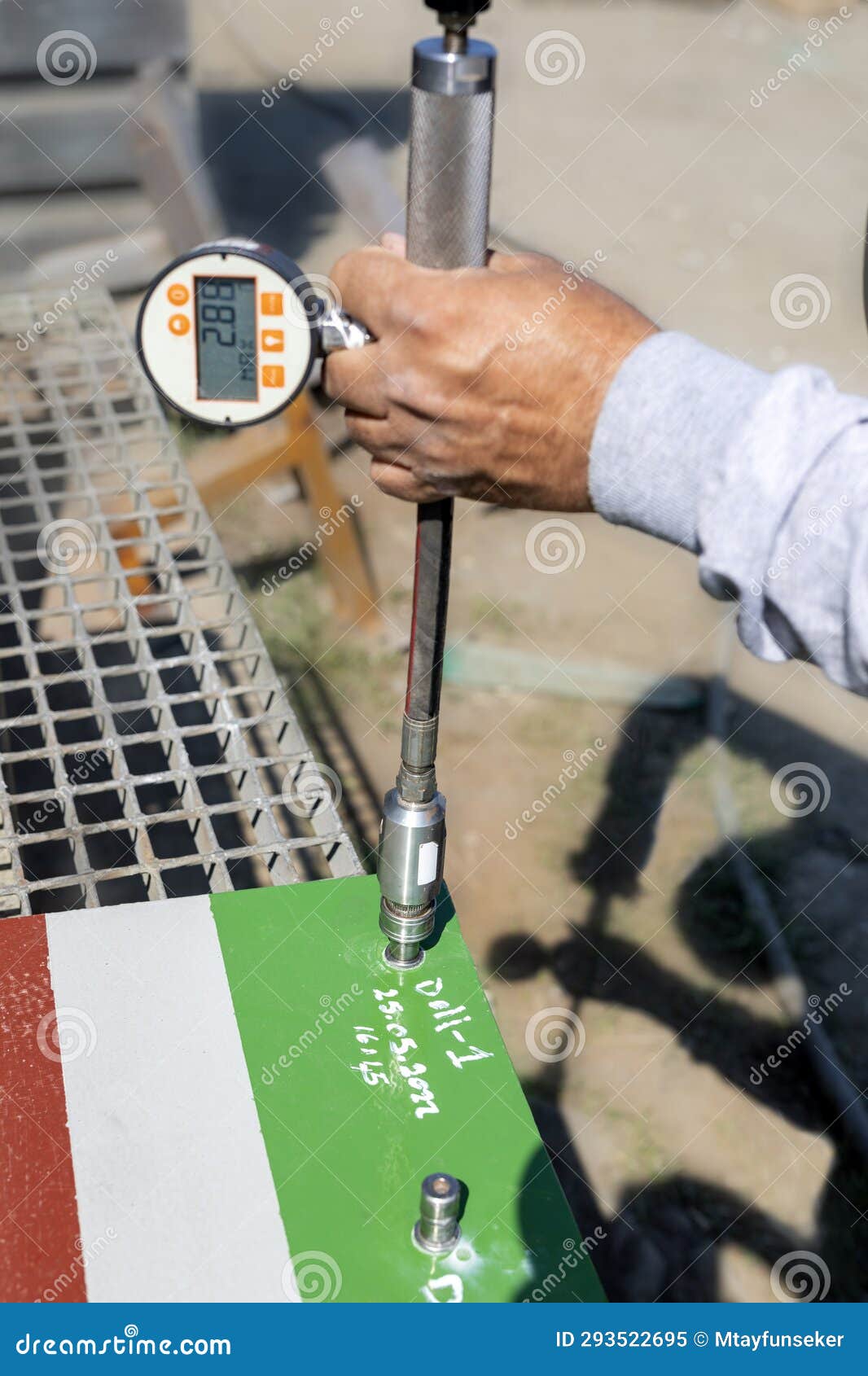
- Attaching the Tester: The portable pull-off adhesion tester (usually hydraulic or mechanical) is positioned over the dolly and securely attached.
- Applying Tension: A continuous, steady, and uniformly increasing tensile force is applied perpendicular to the coated surface.
- Recording the Result: The gauge records the maximum force (pressure) achieved right at the moment the coating separates from the substrate, or when the adhesive fails. This reading is the pull-off strength.
By following these steps precisely, you get an accurate, quantitative value for the adhesion strength, giving you true confidence in your coating application.
Understanding Your Results: Interpreting the Paint Pull Test Scores
Getting a number from your pull test is just the beginning. The real expertise lies in analyzing what failed and why. This detailed analysis helps determine the root cause of any weakness, be it poor surface prep or an issue with the coating material itself.
There are typically three primary modes of failure observed after a Paint Pull Test:
- Cohesive Failure (Type A or B): This happens when the failure occurs within the coating layer itself (either the topcoat, intermediate coat, or primer). If this happens, the adhesion between the layers or to the substrate is stronger than the internal strength of the coating material. This usually indicates good surface preparation, but potentially a weak coating formulation.
- Adhesive Failure (Type C): This is the classic failure, where the coating cleanly separates from the substrate surface. This almost always points back to insufficient surface preparation, contamination (like grease or moisture), or inadequate curing prior to testing.
- Glue Failure (Type D): If the adhesive holding the dolly fails before the coating does, the test result is invalid. This means the actual coating adhesion strength is higher than the recorded value, and the test must be repeated using a stronger glue or allowing a longer cure time.
Most specifications dictate a minimum acceptable adhesion value (e.g., 500 psi). If your result meets or exceeds this number, and the failure mode is cohesive, you can typically proceed with confidence.
The Importance of Record Keeping
Every professional coating application should involve thorough documentation of all adhesion tests. This is critical for warranties and future maintenance planning.
Good record keeping includes details such as the ambient temperature, humidity, date, time, specific equipment used, the exact failure mode, and the numerical result. This documentation provides a solid baseline for future inspections.
By keeping meticulous records, you establish a clear quality trail, protecting yourself and your clients from disputes regarding coating longevity.
Conclusion
The Paint Pull Test is far more than just a box to tick on a project checklist; it is an indispensable tool for guaranteeing the durability and integrity of any protective coating system. Whether you use the qualitative cross-cut method or the definitive pull-off dolly test, verifying adhesion strength is paramount to success.
By understanding the procedures and correctly interpreting failure modes, you can proactively prevent expensive rework and ensure your coated assets withstand the test of time and environmental stress. Ultimately, investing in the proper execution of the Paint Pull Test is investing in quality assurance.
Frequently Asked Questions (FAQ) about the Paint Pull Test
- What is considered a "good" reading for a Paint Pull Test?
- What constitutes a "good" reading depends entirely on the coating type and the substrate. Generally, structural coatings require strengths between 300 psi and 1000 psi (2.1 MPa to 6.9 MPa) or higher. Always reference the project specification or the coating manufacturer's minimum required adhesion value.
- Can the Paint Pull Test damage the substrate?
- The pull-off test is destructive to the coating itself, as a small circular patch is removed. However, if conducted correctly, it should not damage the underlying substrate (like steel or concrete). If the substrate is soft (e.g., masonry), it may sometimes fail cohesively within the substrate material, giving you a strength reading for the substrate itself.
- How soon after application can I perform a Paint Pull Test?
- You must wait until the coating has fully cured, not just dried. Testing too early will yield artificially low results due to insufficient chemical cross-linking. The manufacturer's data sheet usually specifies the required full cure time (which can be several days or weeks, depending on the paint type and temperature).
- Is the Cross-Cut Test adequate for heavy-duty industrial coatings?
- The cross-cut test is generally only recommended for quality control checks on thinner coatings (under 5 mils) and is considered qualitative. For heavy-duty industrial or critical infrastructure projects where minimum tensile strength must be proven, the quantitative Dolly/Pull-Off Paint Pull Test is required by most standards.
Paint Pull Test
Paint Pull Test Wallpapers
Collection of paint pull test wallpapers for your desktop and mobile devices.
Captivating Paint Pull Test Landscape in HD
This gorgeous paint pull test photo offers a breathtaking view, making it a perfect choice for your next wallpaper.
Captivating Paint Pull Test Landscape Concept
Find inspiration with this unique paint pull test illustration, crafted to provide a fresh look for your background.

Mesmerizing Paint Pull Test Picture Concept
Discover an amazing paint pull test background image, ideal for personalizing your devices with vibrant colors and intricate designs.
Lush Paint Pull Test View Art
This gorgeous paint pull test photo offers a breathtaking view, making it a perfect choice for your next wallpaper.

Serene Paint Pull Test Picture in HD
Discover an amazing paint pull test background image, ideal for personalizing your devices with vibrant colors and intricate designs.

Artistic Paint Pull Test Picture for Desktop
This gorgeous paint pull test photo offers a breathtaking view, making it a perfect choice for your next wallpaper.

Crisp Paint Pull Test Photo Photography
Find inspiration with this unique paint pull test illustration, crafted to provide a fresh look for your background.
Breathtaking Paint Pull Test Picture Illustration
Transform your screen with this vivid paint pull test artwork, a true masterpiece of digital design.
Artistic Paint Pull Test Design in 4K
This gorgeous paint pull test photo offers a breathtaking view, making it a perfect choice for your next wallpaper.
Crisp Paint Pull Test Landscape in HD
A captivating paint pull test scene that brings tranquility and beauty to any device.

Vivid Paint Pull Test View Nature
Transform your screen with this vivid paint pull test artwork, a true masterpiece of digital design.

Crisp Paint Pull Test Image Photography
Find inspiration with this unique paint pull test illustration, crafted to provide a fresh look for your background.
Crisp Paint Pull Test Design Nature
This gorgeous paint pull test photo offers a breathtaking view, making it a perfect choice for your next wallpaper.
Beautiful Paint Pull Test Scene Photography
Explore this high-quality paint pull test image, perfect for enhancing your desktop or mobile wallpaper.
Gorgeous Paint Pull Test View Digital Art
A captivating paint pull test scene that brings tranquility and beauty to any device.

Vibrant Paint Pull Test Scene in 4K
Experience the crisp clarity of this stunning paint pull test image, available in high resolution for all your screens.

Gorgeous Paint Pull Test Artwork Illustration
A captivating paint pull test scene that brings tranquility and beauty to any device.

Exquisite Paint Pull Test Scene for Your Screen
A captivating paint pull test scene that brings tranquility and beauty to any device.
:strip_icc()/Can-You-Paint-Over-Wallpaper-1331852257-066f01b6626c4b35bbc2cd68d7c30183.jpg "Breathtaking Paint Pull Test Background Nature")
Breathtaking Paint Pull Test Background Nature
Transform your screen with this vivid paint pull test artwork, a true masterpiece of digital design.
Detailed Paint Pull Test Scene Collection
Experience the crisp clarity of this stunning paint pull test image, available in high resolution for all your screens.
Download these paint pull test wallpapers for free and use them on your desktop or mobile devices.